Fairglen Additions — the heart of Eichler San Jose
West of downtown San Jose in Willow Glen, near Curtner Avenue, Fairglen Additions is the city's largest and most intact Eichler community — 218 homes built between 1959 and 1961, on roughly 6,000-square-foot lots, in thirteen floor plans by Anshen & Allen, Jones & Emmons and Claude Oakland. In 2019 the neighborhood was added to the National Register of Historic Places.
Joseph Eichler's biggest San Jose bet
By the late 1950s Joseph Eichler had proven the model in Palo Alto and the mid-Peninsula, and he brought it to San Jose at scale. Between 1959 and 1961 his company built the Fairglen Additions — 218 houses on quiet, tree-lined streets west of downtown, near Curtner Avenue and the edge of Willow Glen.
The tract was designed by the architects most associated with Eichler's best work: Anshen & Allen, Jones & Emmons, and Claude Oakland. Buyers chose from thirteen floor plans on uniform ~6,000-square-foot lots — including several atrium models and the distinctive double-gable roofline that collectors chase today.
Fairglen's architecture has stayed remarkably original, and the neighborhood knows it. Residents launched a Fairglen Art Festival and “Joey Awards” for the best remodels back in the 1960s, and today they work with the City of San Jose on objective design standards meant to protect the tract's mid-century character. In 2019 the neighborhood earned a listing on the National Register of Historic Places — a rare distinction for a postwar tract.
Thirteen plans, one clear idea
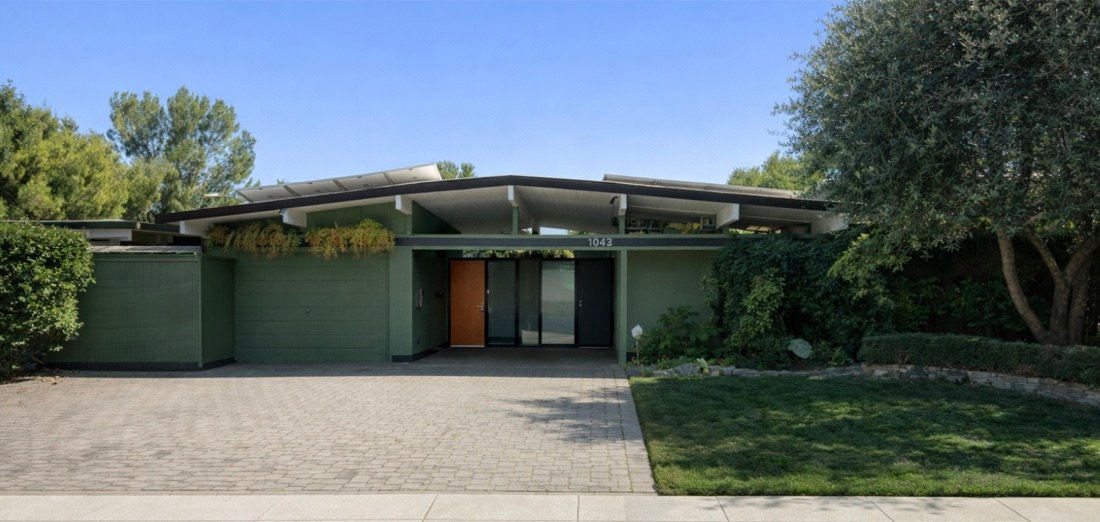
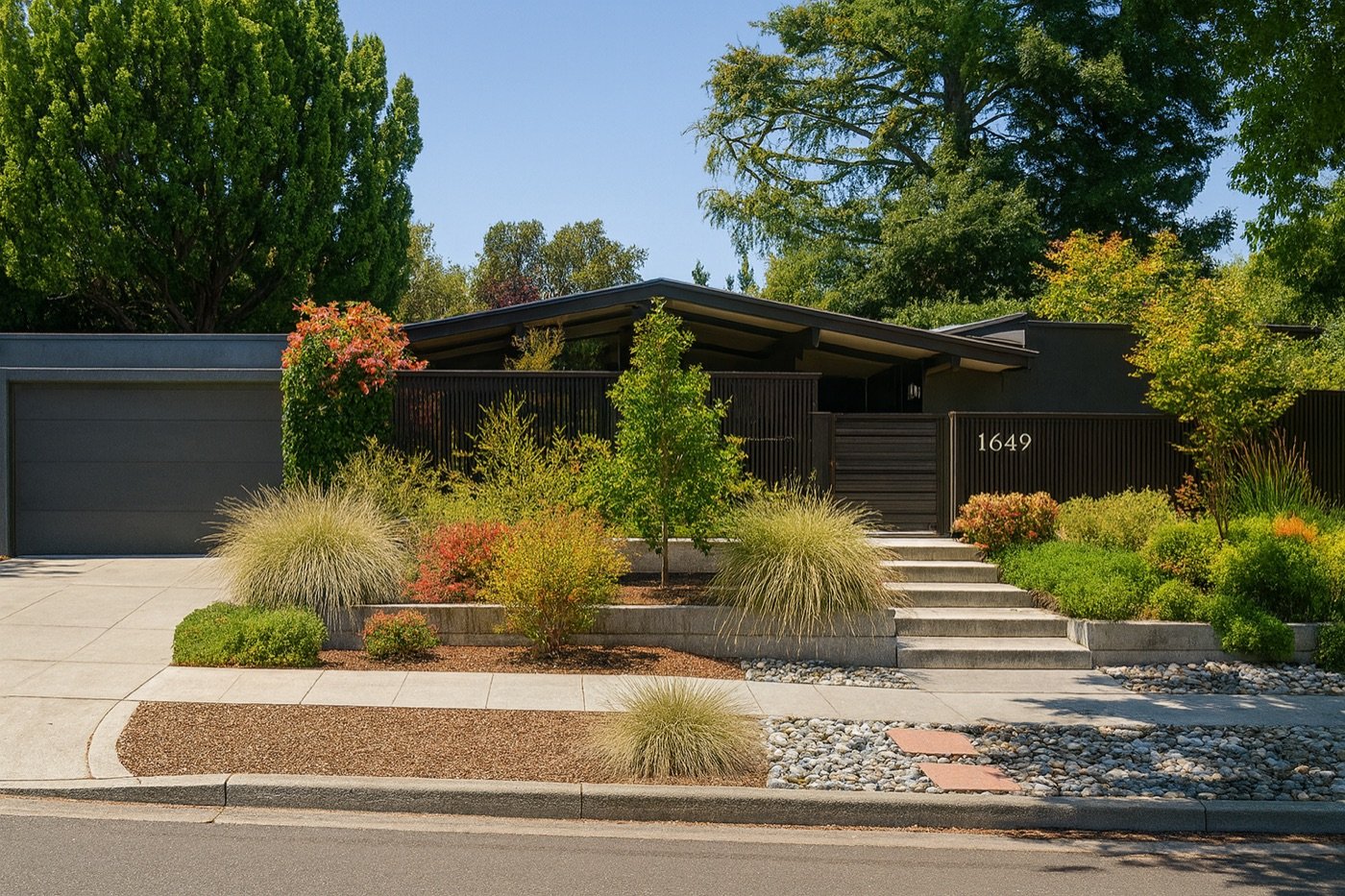
Every Fairglen house is built on the same premise: post-and-beam framing carries the roof, so interior walls carry nothing and the plan can open up. Ceilings run flat and continuous from the entry straight out to a wall of glass; the street face is nearly blank for privacy, and the living happens toward the private garden.
The thirteen plans vary the formula — some wrap around a central open-air atrium, some run long and low, and a handful carry the sought-after double-gable roof. Original details still turn up throughout the tract: Philippine mahogany paneling, exposed beams, globe lights, radiant heat cast into the slab, and floor-to-ceiling glass.
Fairglen's most famous house is the former tract model — San Jose's only double A-frame Eichler — which traded in 2024 in the mid-$2 millions, roughly 15% above the area's typical Eichler price.
Fairglen Additions at a glance
- Built
- 1959–1961, by Joseph Eichler
- Size
- 218 homes on roughly 6,000-square-foot lots
- Architects
- Anshen & Allen, Jones & Emmons, Claude Oakland — thirteen floor plans
- Models
- Long-and-low, atrium, and double-gable variants
- Landmark status
- National Register of Historic Places, listed 2019
- Location
- Willow Glen, west San Jose, near Curtner Avenue
- Schools
- San Jose Unified — Booksin Elementary (~7/10 GreatSchools), Willow Glen High (~7/10); Willow Glen Middle is weaker (~4/10). Magnet and private options are widely used for the middle years.
- Parks
- About a block from Booksin Park; a short drive to Willow Glen's Lincoln Avenue
- Typical price
- Recently around $2M, with well-preserved atrium and double-gable models higher
- The draw
- The authentic Eichler lifestyle and an unusually engaged, preservation-minded community
The San Jose Eichler market, concentrated on a few streets
Fairglen is where most San Jose Eichler sales happen — and where the gap between a restored original and a deferred-maintenance house is widest.
- Supply is thin and specific. With 218 homes and many long-term owners, only a handful list in a typical year. When an original-condition atrium or double-gable model comes up, expect competition from mid-century buyers across the Bay Area.
- Prices run a discount to Cupertino. San Jose Eichlers have recently averaged near $2.05M — roughly a 10–20% discount to Cupertino's Fairgrove tract, almost entirely a school-district trade-off rather than an architecture one.
- Condition is the whole ballgame. A sympathetically restored house with its atrium, mahogany and roofline intact can clear well over asking; a house fought-with over the decades sits longer and sells for less.
- The design standards matter. Know what the neighborhood's draft standards say about street-facing additions, atrium enclosures and material changes before you buy or list — it changes what a house is worth.
A 1960s tract that still feels like one
Fairglen's streets are tree-lined, sidewalked and quiet, on lots big enough for real gardens. The community runs on genuine mid-century enthusiasm — the art festival, the remodel awards, the shared project of keeping the tract intact — and neighbors tend to know each other.
Willow Glen's Lincoln Avenue, with its cafes, bakeries and boutiques, is a mile or two east. Santana Row and Westfield Valley Fair are about ten minutes northeast. Downtown San Jose and Diridon Station are under ten minutes, and Highways 87, 280 and 17 are all close for the commute across Silicon Valley.
What to know before you offer
Fairglen rewards buyers who do the homework. Learn the thirteen plans well enough to know which one you're standing in, and read the house honestly: the age and type of the roof (low-slope Eichler roofs need periodic care), whether the radiant slab still works or has been bypassed, original glazing versus retrofit, and how sympathetic the last remodel was.
Decide up front how much originality matters to you — it will shape both your search and your budget — and be ready to move quickly when the right plan lists.
Getting top dollar for your Eichler
Market the house as an Eichler, not a three-bedroom ranch. Show off the atrium, the glass wall, any original mahogany and globe lights, and the double-gable if you have one. The right buyer is searching specifically for what you own.
Handle deferred maintenance on the roof and radiant system before listing, or have quotes ready. Spring, with the atrium and garden at their best, is the strongest window.
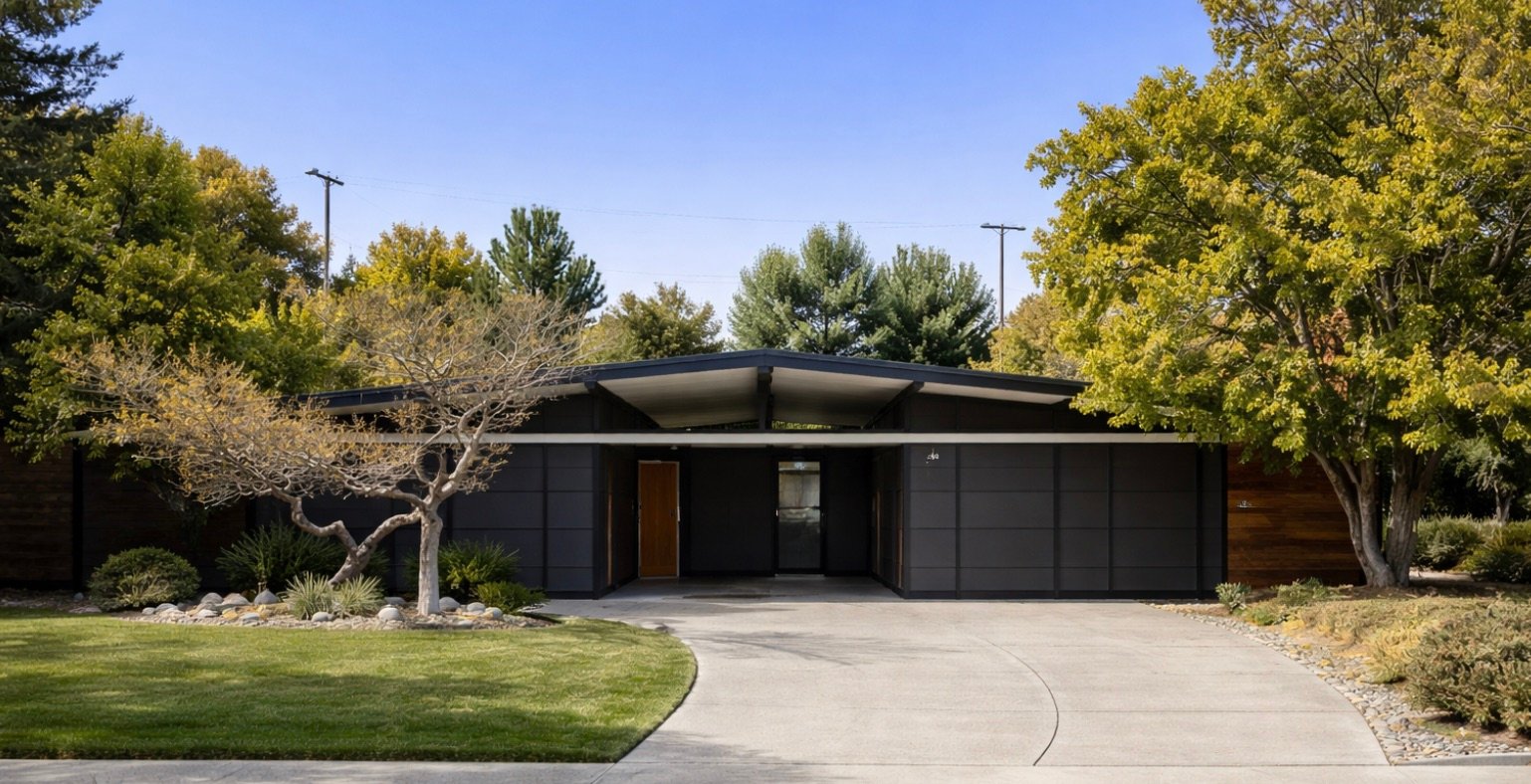
Fairglen Additions, in pictures
Thinking about Fairglen Additions?
Send us the address or the block you're watching. We'll tell you the plan, the condition issues to expect, the comps, and what it's worth — by hand.